Knowledge Centre · Species guidance
Cherry shrimp care: what they need and why colour morphs shouldn't be mixed
Red cherry, blue, yellow, orange and several other named colours sold in shops are all the same species, Neocaridina davidi, selectively bred into different colour strains — not different types of shrimp. That matters because they'll interbreed readily if kept together, and sources are consistent that the offspring tend to drift back toward the plainer wild-type colouration over a few generations rather than staying vividly coloured. This species also breeds considerably more easily in an ordinary freshwater tank than some other popular aquarium shrimp, so a growing population is the normal outcome of keeping them well, not a warning sign. This guide covers what they need, how colour genetics actually work here, and how to keep the colour you paid for looking the way it did in the shop.
Before adding cherry shrimp
May be suitable when…
Your tank is established and stable, you're comfortable with a shrimp population that will likely grow over time, and you're keeping to a single colour morph if maintaining that exact colour matters to you.
Reconsider when…
You're planning to mix several colour morphs and expecting each to breed true, you don't want your shrimp numbers to increase at all, or your tankmates are fish large enough to eat shrimp and shrimplets.
Worth knowing: "cherry shrimp," "blue dream shrimp" and most other Neocaridina trade names on sale are colour strains of one species, not separate species with different needs.
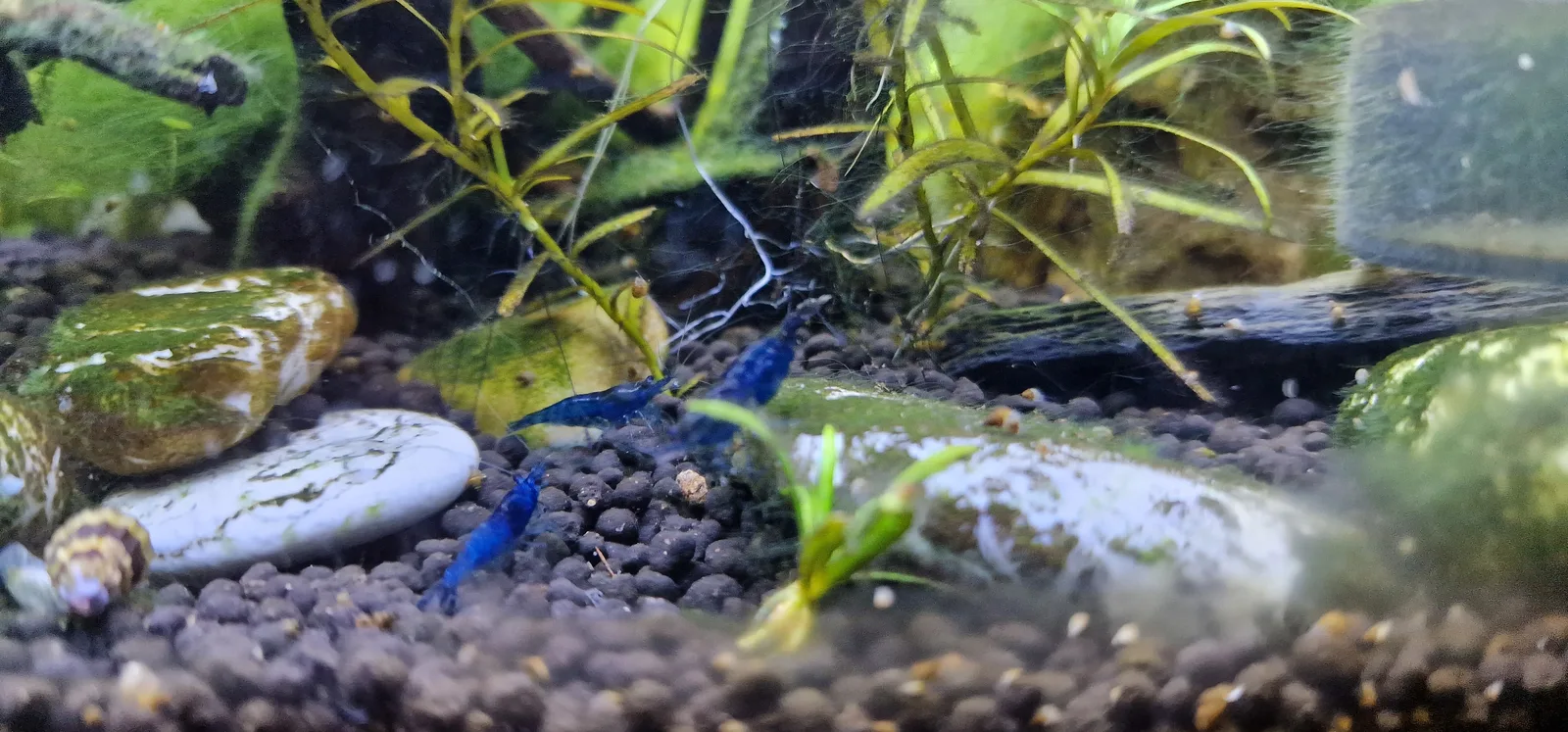
Identification, colour morphs and sexing
Neocaridina davidi (Bouvier, 1904) is a small freshwater shrimp in family Atyidae[1], typically reaching around 3–4cm as an adult. Wild-type colouration is a fairly plain, variable brown or near-transparent, and every named colour strain sold in the trade — red cherry, blue, yellow, orange, black and others — has been selectively bred from that same wild-type stock. They are not different species or subspecies, and their care needs don't differ by colour.
This has a direct practical consequence worth understanding before you buy: because every colour is the same species, they'll interbreed freely if kept together, and offspring are consistently reported across specialist and hobbyist sources to trend back toward the plainer wild-type colouration over a few generations rather than reliably reproducing a bright parent colour. If you're buying a specific colour because you want your tank to stay that colour, keeping only that one morph — rather than mixing several — is the more reliable way to keep it looking that way.
Sexing is straightforward once shrimp are mature: females are noticeably larger, with a more rounded underside to carry eggs, and often show deeper, more saturated colour than males of the same strain.
Water parameters that matter most
Treat the ranges below as a practical starting point gathered from specialist shrimp-keeping sources, not a single precise scientific target. One distinction worth flagging clearly: Neocaridina species including cherry shrimp are commonly kept in harder, more alkaline water than Caridina species such as Crystal Red or Bee shrimp, which typically need soft, more acidic water and tolerate far less variation. Advice aimed at one genus isn't automatically safe for the other.
| Factor | Commonly reported range | Notes |
|---|---|---|
| Temperature | Roughly 18–26°C (65–79°F) | A genuinely wide tolerance; avoid the warmer end for extended periods where possible. |
| pH | Roughly 6.8–7.8 | Neutral to slightly alkaline; stability matters more than hitting an exact figure. |
| General hardness | Moderate to hard | Adequate mineral content supports moulting — see "Water stability and moulting" below. |
| Ammonia / nitrite | Zero | As sensitive as most freshwater invertebrates — see our ammonia and nitrite guides. |
| Copper | None, ever | Copper-based fish medications are toxic to shrimp at treatment concentrations — see our Amano shrimp guide for more on this risk. |
Tank setup and substrate colour
N. davidi is described as a habitat generalist in the wild, capable of occupying a range of environments and tolerating slower-moving water such as ditches and canals as well as its preferred higher-flow habitats[2]. In the aquarium, a modest, stable, planted tank with some cover — moss, fine-leaved plants or leaf litter — suits them well and gives newly hatched shrimplets somewhere to hide.
Substrate colour is worth a specific mention. A peer-reviewed choice-experiment study on this species found shrimp consistently preferred darker backgrounds over lighter ones, regardless of their own body colouration or how well it matched the substrate[4]. That's a genuine behavioural preference, not just an aesthetic convention, and it lines up with the common hobbyist practice of using dark substrate to make bright colour morphs stand out visually — the two happen to point the same direction, even though the study's finding was about the shrimp's own preference rather than how they look to us.
Feeding behaviour and diet
N. davidi is an opportunistic omnivore, documented as feeding on algae, detritus and small invertebrates such as tiny worms and crustaceans it finds while foraging[2]. In an established tank, biofilm and algae provide a genuine baseline food source, supplemented with sinking shrimp-specific food, blanched vegetables, or occasional protein a few times a week. As with other dwarf shrimp, avoid relying purely on "the tank looks clean, they must be fine" as a feeding check — a visibly thinner-looking shrimp is a more reliable indicator than tank cleanliness alone.
Breeding: why a growing population is normal
This is the most important expectation to set correctly before buying cherry shrimp, and it's the opposite problem to some other popular aquarium shrimp. University of Florida IFAS Extension documents this species carrying eggs under the body for an incubation period of roughly 16 to 19 days, with clutch sizes commonly in the range of 43 to 60 eggs[3]. Critically, unlike species that need a marine or brackish larval stage, N. davidi young hatch directly as miniature versions of the adult, only around 1–2mm long, and require no special water chemistry to survive[3].
The practical upshot: in a stable, well-fed tank, a healthy group of cherry shrimp will very likely breed, and the population will grow over time without any special intervention. That's a feature for most keepers, not a problem, but it's worth planning for — whether that means having a plan for extra shrimp, or being comfortable with a population that increases on its own.
Tank mates and compatibility
Cherry shrimp are peaceful and are widely kept alongside small, non-predatory community fish, other peaceful invertebrates, and most snails. As with any dwarf shrimp, the real compatibility question is size and appetite rather than temperament: any fish large enough to see a shrimp or shrimplet as food is a genuine predation risk, and newly hatched young in particular are small enough for many otherwise "peaceful" community fish to eat. A densely planted tank with plenty of hiding cover reduces this risk but doesn't eliminate it in a tank stocked with a genuine predator. Small, calm surface dwellers that occupy a different part of the water column — clown killifish are a documented example — tend to make lower-risk tankmates than an actively foraging mid-water species; a peacock gudgeon is a documented case worth avoiding instead, since it's reported to prey on small dwarf shrimp specifically.
They're commonly kept alongside Amano shrimp, though it's worth knowing the two aren't interchangeable: Amano shrimp are considerably larger and can out-compete smaller cherry shrimp for food if the tank isn't feeding both adequately, and Amano shrimp need brackish-to-marine water to breed, so they won't multiply in a freshwater tank the way cherry shrimp will. AquaPulse's Water Check can help you confirm your water chemistry is stable while you plan a stocking decision like this.
Water stability and moulting
Like all crustaceans, cherry shrimp periodically shed and regrow their exoskeleton, and are genuinely vulnerable immediately afterward while the new shell hardens. Leaving a shed exoskeleton in the tank rather than removing it lets shrimp graze it for calcium, a useful habit in softer water especially. Avoid adding cherry shrimp to a tank that's still cycling or has recently shown a cycle disruption — sudden ammonia or nitrite exposure is a welfare risk for any invertebrate, and shrimp generally show fewer obvious external symptoms than fish before a problem becomes serious. Copper-based medications, sometimes used to treat fish parasites, remain toxic to shrimp even at concentrations used therapeutically for fish, and can re-release from substrate or décor after water tests read zero.
Normal behaviour
- Near-constant grazing across leaves, décor and substrate — normal foraging, and a sign of a settled shrimp.
- A female visibly carrying eggs ("berried") under her body — a normal, healthy sign in a mature female, not a health concern.
- Increased hiding around moulting, sometimes for a day or so before and after — normal, not illness on its own.
- Colour that looks paler or duller after a moult, deepening again over the following days — normal as the new shell settles.
- Clustering around a good food source — normal social/feeding behaviour, not crowding stress, in a tank sized for the group.
Warning signs and what to check first
None of the signs below confirms a specific problem on its own. Each has more than one possible explanation, and reacting immediately — especially with a large water change or a new product — before checking the more likely causes can make things worse.
Sudden, unexplained deaths
What it might mean: Copper or another toxin exposure, a sudden parameter swing, or a failed moult.
What else could explain it: Natural end-of-lifespan in an older shrimp.
Check this first: Anything recently added to the tank (medication, new décor, a different water source), and ammonia, nitrite and pH.
Don't: Assume shrimp are simply fragile without checking for a specific cause first.
Persistently pale or washed-out colour
What it might mean: Stress, water-quality issues, or a lower colour grade to begin with; see "Why has my cherry shrimp turned pale" in the FAQ below.
What else could explain it: A recent moult, or a lighter-coloured substrate not favoured by this species.
Check this first: Water parameters, and whether colour recovers within a few days.
Don't: Assume pale colour alone means illness without checking other behaviour.
Population not growing despite an apparently healthy group
What it might mean: An all-male or heavily skewed-sex group, insufficient feeding, or water parameters outside a comfortable range for breeding.
What else could explain it: A genuinely new group that simply hasn't reached maturity yet.
Check this first: Whether you can identify both sexes present, and general water stability.
Don't: Assume something is wrong quickly — maturity and settling in both take time.
Failed or incomplete moult
What it might mean: Insufficient calcium or mineral content in the water, or a health problem.
What else could explain it: A moult still in progress — give it time before intervening.
Check this first: General hardness, and whether shed exoskeletons are left for shrimp to graze.
Don't: Try to physically assist a stuck moult — this is more likely to injure the shrimp than help it.
Common mistakes
- Mixing multiple colour morphs while expecting each to breed true, then being surprised when offspring trend toward plain wild-type colouration.
- Using copper-based medication anywhere in the same system, including a shared filter or décor moved between tanks.
- Being unprepared for a growing population, having bought them without realising how easily this species breeds compared to some other shrimp.
- Housing them with fish large enough to eat shrimplets, then being puzzled why the population never seems to grow.
- Applying Caridina-specific advice (very soft, acidic water) to this genus, which generally prefers harder, more alkaline conditions.
What the aquarium cannot compensate for
- A well-run tank cannot prevent colour morphs from interbreeding if more than one is kept together — that's a stocking decision, not a water-parameter one.
- Good water chemistry cannot substitute for adequate feeding once available algae and biofilm are exhausted.
- No amount of water-quality management protects an invertebrate from a copper-based treatment used anywhere in the same system.
- Plenty of hiding cover reduces but doesn't eliminate predation risk from a tankmate large enough to eat shrimp or shrimplets.
When specialist help may be appropriate
Invertebrate-specific veterinary expertise is limited, but a knowledgeable specialist retailer or aquatic-invertebrate specialist can sometimes help interpret an unusual case, particularly a sudden multi-shrimp die-off.
Frequently asked questions
Can I mix different colours of cherry shrimp in the same tank?
You can, but their offspring won't reliably stay the colour you bought. Every colour sold under this name — red, blue, yellow, orange and others — is the same species, Neocaridina davidi, and they'll interbreed freely. Sources consistently describe the resulting offspring drifting back toward the plainer brown or clear wild-type colouration over a few generations, rather than staying vividly coloured. If you want to keep a specific colour looking the way it did when you bought it, keeping only that one morph is the more reliable approach.
Will cherry shrimp take over my tank?
They breed considerably more easily than many other popular aquarium shrimp, so a genuine population increase over time is the normal outcome, not a sign of a problem. Unlike some other shrimp species that need a marine larval stage to develop, cherry shrimp eggs hatch directly into miniature versions of the adult in ordinary freshwater. If you'd prefer a shrimp you can stock a fixed number of without a growing population, that's worth knowing before you buy, not after.
Can I keep cherry shrimp with Amano shrimp?
Generally yes, both are peaceful and commonly kept together, but it's worth knowing they're not interchangeable in care needs. Amano shrimp are considerably larger and can out-compete smaller cherry shrimp for food if the tank isn't feeding both adequately, and Amano shrimp require brackish-to-marine water to breed, so they won't multiply the way cherry shrimp will in the same freshwater tank.
Why has my cherry shrimp turned pale or lost its colour?
Stress, poor water quality, a recent moult, or simply being a lower-grade individual whose colour was never that saturated to begin with are all more common explanations than illness. Colour intensity in this species is also influenced by its surroundings; research on colour morphs of this species found they generally preferred darker backgrounds regardless of their own colouration, which is part of why a dark substrate is commonly recommended for bringing out colour, not just aesthetics.
Do cherry shrimp need the same water as Caridina shrimp like Crystal Reds?
No, and this is a common source of mismatched advice. Neocaridina species including cherry shrimp are generally kept in neutral-to-slightly-alkaline, moderately hard water, while Caridina species such as Crystal Red or Bee shrimp typically need soft, more acidic water and are considerably less tolerant of variation. Advice written for one genus isn't automatically safe to apply to the other.
Sources and uncertainty
- Published
- 29 July 2026
- Last reviewed
- 29 July 2026
- Written and maintained by
- AquaPulse (Valeon Labs Ltd)
This guide draws on a decapod taxonomic reference database, a US federal ecological risk assessment, a University of Florida IFAS Extension species profile, and a peer-reviewed behavioural study, alongside specialist shrimp-keeping consensus for day-to-day water-parameter practicalities where no single stronger source covered a genus-wide range. We'll update this page if we find something we've got wrong.
Good to know: This guide provides general informational guidance only. It is not a substitute for specialist invertebrate-health advice.
- [1] DecaNet — "Neocaridina davidi (Bouvier, 1904)" Used as the taxonomic authority for species name and author citation. WoRMS itself lists this freshwater species as out of scope and defers to DecaNet, the decapod-focused sister database.
- [2] US Fish & Wildlife Service — "Ecological Risk Screening Summary: Cherry Shrimp (Neocaridina davidi)" (June 2025) Used for native range, wild habitat generalism, and documented wild diet.
- [3] University of Florida IFAS Extension — EENY-751, "Cherry Shrimp Neocaridina davidi (Bouvier 1904)" (revised June 2024) Used for reproductive biology: incubation period, clutch size, and direct development with no larval stage.
- [4] Plichta, Z., Kobak, J., Maciaszek, R. & Kakareko, T. (2021), "All Shades of Shrimp: Preferences of Colour Morphs of a Freshwater Shrimp Neocaridina davidi (Decapoda, Atyidae) for Substrata of Different Colouration," Animals, 11(4), 1071 Peer-reviewed study, used for the finding that this species prefers darker substrate backgrounds regardless of its own body colouration.
What we deliberately left out: a precise number of generations before colour reliably reverts when morphs are mixed, since sources agree on the direction of the effect but not on an exact figure; and a specific Mendelian inheritance ratio for colour genetics sometimes repeated in hobbyist sources, which we couldn't trace to a verifiable primary source.