Knowledge Centre · Stocking and planning
Choosing tank mates for a community aquarium: what actually determines compatibility
A "peaceful community fish" label tells you almost nothing on its own. Compatibility isn't a fixed property of a single species — it's a relationship between two species' adult size, temperament, water needs and social structure, and it can change as either species grows. Across the species guides we've researched on this site, the single most common cause of a stocking mistake isn't buying an aggressive fish; it's buying a genuinely peaceful one and pairing it with something its adult size, or its own territorial needs, makes a poor fit. This guide covers the factors that actually determine compatibility, a practical checklist to work through before adding anything new, and real, documented examples of pairings that look fine at the point of sale and aren't.
At a glance
What determines compatibility
Adult size relative to other tankmates, temperament (including toward its own species), water-parameter overlap, and whether your specific tank gives each species what it needs.
Why it matters
Most documented "surprise" incompatibilities aren't sudden personality changes — they're predictable outcomes of a fish reaching its adult size or behaviour that a label never mentioned.
Sensible approach
Research each species' adult size and known compatibility issues specifically, rather than relying on a single temperament word or a generic chart.
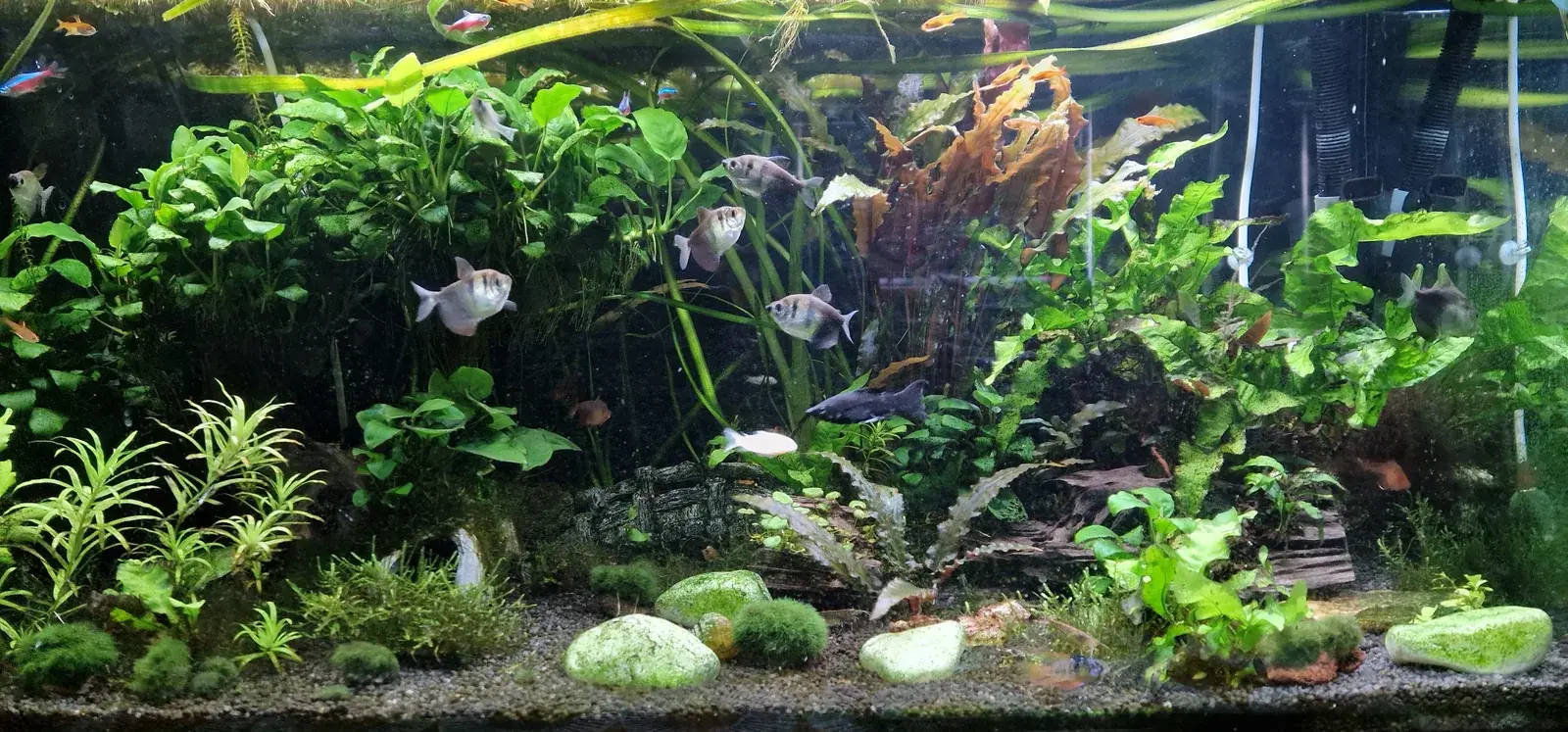
Why a "peaceful community fish" label isn't enough
Retail labels describe a species in isolation, usually at the size it's sold, and usually with a single temperament word. None of that captures compatibility, because compatibility is relational: it depends on what else is in the tank, how large each species actually grows, and how each behaves toward its own species specifically, not just toward others in general. A fish can be entirely accurately described as "peaceful" and still become a genuine predation risk to something smaller once it's grown, or a target for a fin-nipping tankmate its label never warned you about.
This isn't a rare edge case. Across the species-specific guides we've researched for this site, a recurring pattern shows up again and again: a fish sold small and marketed as suitable for a general community tank turns out to have a real, well-documented compatibility issue that only becomes obvious once you look at that specific species' adult size or social behaviour, not its marketing.
The factors that actually determine compatibility
- Adult size, not size at purchase. A fish that looks harmless next to similarly sized tankmates in the shop can become large enough to see some of them as food within months. Freshwater angelfish and small schooling fish like neon tetras are a well-documented example: see our freshwater angelfish guide for why "community fish" undersells what it becomes.
- Temperament toward its own species, not just others. Several popular species are peaceful toward other fish generally but prone to serious conflict between individuals of the same sex — see "Documented mismatches" below.
- Predation risk in both directions. It's not only about large fish eating small ones. Fin-nipping species can pose a genuine risk to slower, long-finned fish regardless of the longer-finned fish's own size or temperament.
- Water-parameter overlap. All species in a tank should share a genuinely compatible range for temperature, pH and hardness — not just each tolerate the same numbers individually, but be comfortable in the same shared range long-term.
- Social and shoaling needs. Some species need a proper group to behave and feel secure; keeping too few isn't a compatibility issue between species so much as an unmet need that shows up as stress or hiding.
- Feeding competition. A calm, slow, bottom-dwelling or filter-feeding species can be consistently outcompeted for food by faster tankmates even without any direct aggression.
A practical checklist before adding a new tank mate
-
Look up the adult size of every species involved
Not the size at purchase. Compare the smallest adult size in the tank against the largest, and ask honestly whether the largest could eventually fit the smallest in its mouth.
-
Check the species' behaviour toward its own kind
A "peaceful" rating usually describes behaviour toward other species. Search specifically for whether keeping more than one, or more than one of a particular sex, causes problems.
-
Compare water-parameter ranges directly
Overlay the ranges rather than checking each species tolerates your current readings individually — a shared, comfortable middle ground matters more than each surviving at the edge of its own range.
-
Consider your tank's specific layout, not just its volume
Hiding spots, open swimming space, tank height and territory-defensible features all affect real-world compatibility beyond what a litre or gallon figure captures.
-
Introduce new fish thoughtfully and keep watching
Even a well-researched pairing benefits from observation over the following days and weeks — individual temperament varies, and early monitoring catches a problem before it escalates.
Documented mismatches worth knowing about
These aren't hypothetical warnings — each is drawn from the specific, sourced research behind our own species guides.
| Pairing | The issue | Read more |
|---|---|---|
| Adult angelfish + small schooling fish (e.g. neon tetras) | A mid-sized cichlid once grown, with a mouth large enough to take a small fish whole; an opportunistic predator by nature. | Freshwater angelfish guide |
| Fin-nipping species (e.g. tiger barbs) + long-finned fish (angelfish, betta, gourami) | Persistent nipping at trailing fins, causing stress and injury, largely independent of tank size. | Freshwater angelfish guide |
| Chinese algae eater + angelfish, discus or goldfish | Adult Chinese algae eaters are documented rasping the body slime of slow, broad-sided fish as their diet shifts with age. | Chinese algae eater guide |
| Two or more male bettas | Will typically fight, sometimes seriously; not a safe combination regardless of tank size. | Betta fish guide |
| Two or more male three spot gouramis | Territorial toward each other; a single male, optionally with females, is more reliably peaceful. | Three spot gourami guide |
| Corydoras kept singly or in pairs | Genuinely social, shoaling fish; too few tend to hide and show stress rather than settle in. | Corydoras catfish guide |
| Kuhli loach kept alone or in pairs | Genuinely social with its own kind; too few individuals means it stays hidden almost permanently rather than settling in and being seen, even though it isn't unsafe as such. | Kuhli loach guide |
| Dwarf shrimp (cherry, Amano, vampire) + larger predatory fish | Any fish large enough to see a shrimp as food is a genuine risk, especially right after a moult when the shell is soft. | Cherry shrimp guide |
| Mbuna cichlids + peaceful community fish | Two independent problems at once: intense territorial aggression, and hard, alkaline water needs incompatible with most peaceful community species. | Mbuna cichlid guide |
| Male-heavy swordtail or platy groups | Males pursue females persistently to mate; too few females relative to males means that attention never lets up, causing real, avoidable stress. | Swordtail and platy guide |
| Peacock gudgeon + small dwarf shrimp (e.g. cherry shrimp) | Documented as preying on small dwarf shrimp, particularly younger or smaller individuals; larger shrimp such as Amano are a meaningfully safer alternative. | Peacock gudgeon guide |
| Hillstream loach + typical warm-water tropical community | Needs meaningfully cooler water and much stronger current than most standard tropical setups provide; a common, easily missed environmental mismatch rather than a temperament issue. | Hillstream loach guide |
| Panda Garra kept in twos or threes | Territorial toward its own species; a small group concentrates that aggression onto one individual — a single fish on its own, or a full group of five or more, both work better. | Panda Garra guide |
| German blue ram + typical hard-water peaceful community fish | Calm temperament, but needs soft, warm, acidic water that most otherwise-peaceful community species tolerate poorly long-term — a water-chemistry mismatch, not a behavioural one. | German blue ram guide |
| Clown killifish + fast or boisterous surface feeders | A genuinely tiny, passive surface feeder that gets outcompeted for food by faster, more assertive tankmates, rather than causing problems itself. | Clown killifish guide |
| African butterflyfish + small surface-dwelling fish (e.g. hatchetfish) | A surface-ambush predator that will eat any fish it can fit in its mouth, and separately documented to compete aggressively with other fast surface feeders for food. | African butterflyfish guide |
What not to do
- Don't stock based on a fish's size or behaviour at the point of sale — plan around what it becomes.
- Don't assume a "peaceful" rating covers behaviour toward the fish's own species specifically.
- Don't rely on a single generic compatibility chart without checking the specific factors behind its recommendations.
- Don't add several new tankmates at once — if a problem appears, you won't know which addition caused it.
- Don't assume a documented mismatch won't apply to you because your tank is larger — some of the issues above, like fin-nipping or male-male aggression, aren't reliably solved by extra space alone.
When to hold off adding a new tank mate
Prevention
- Research a specific species' documented adult size and compatibility issues before buying, not after you notice a problem.
- Keep a simple written stocking plan, including adult sizes, so future additions get checked against the whole tank, not just memory.
- Introduce new livestock one species at a time where practical, watching for a period before adding another.
- Revisit compatibility as your existing fish mature — a combination that worked with juveniles can stop working as they reach adult size.
Frequently asked questions
Does a "peaceful" label mean a fish is safe with everything?
No. Temperament labels are usually accurate as far as they go, but compatibility isn't a fixed property of one species — it's a relationship between two species' adult size, temperament and needs. A genuinely peaceful fish can still be a predation risk to something smaller, or a target for a fin-nipping tankmate, regardless of how it's marketed.
How do I know if a fish will outgrow its tankmates?
Research each species' documented adult size, not the size it is when sold, and compare that against every other species you're planning to keep with it, not just the tank's total volume. A fish that looks harmless next to similarly small tankmates in the shop can become large enough to eat some of them within months — freshwater angelfish and small schooling fish like neon tetras are a commonly documented example of this.
Can two fish of the same species always be kept together safely?
Not necessarily, and this is a common source of avoidable aggression. Several popular species are specifically documented as prone to conflict between individuals of the same sex — two male bettas or two male three spot gouramis are commonly cited examples — even though the species overall is considered peaceful toward other fish. Checking a species' own social structure, not just its general temperament rating, matters before assuming safety in numbers.
How many fish can my tank actually hold?
That's a related but different question to compatibility, and we cover it separately in our Aquarium Calculator: there's no reliable universal formula, since bioload, adult size, temperament and filtration all vary enormously by species. This guide focuses on which species can safely share a tank together; the calculator focuses on how many and how large.
Is it safe to trust a generic online fish compatibility chart?
Treat it as a starting point, not a guarantee. A general chart can't account for your specific tank's size, layout, hiding spots, feeding routine or the individual temperament of the actual fish you own, all of which genuinely affect whether a pairing that works for one keeper works for another. Researching the specific factors behind a recommendation, not just the recommendation itself, is what lets you judge whether it applies to your situation.
For the separate question of how many fish you can keep
Aquarium Calculator
Covers bioload, filtration and tank footprint alongside the volume calculation — a different question from whether two specific species get along.
Confirming water quality when something changes
The compatibility problems in the table above rarely announce themselves on day one. A fin-nipper doesn't nip on day one; a fish flagged for territorial aggression is often perfectly calm until it reaches the size or age where that instinct switches on. If you notice a change and want to rule out water quality as a contributing factor, AquaPulse's Water Check can hold that test result alongside your last one, so you can see whether a reading has actually drifted rather than guessing.
Water Check works from water-chemistry readings you test and enter yourself — it isn't a behaviour or compatibility tracker, and it can't tell you whether two specific fish are getting along. For the plain-language explainer without the app, see the Water Check feature page.
Sources and editorial information
- Published
- 29 July 2026
- Last reviewed
- 4 August 2026
- Written and maintained by
- AquaPulse (Valeon Labs Ltd)
This guide draws primarily on AquaPulse's own species-specific guides, each independently researched and sourced against specialist and, where available, peer-reviewed material — see the "Documented mismatches" table above for direct links to that underlying research. General compatibility principles (adult size, bioload, water-parameter overlap) are corroborated across multiple specialist aquarium-keeping and stocking-guidance sources. We deliberately avoided repeating "one inch of fish per gallon" and similar simplified rules as a genuine formula, since our own Aquarium Calculator research found they don't hold up against how much bioload, adult size and temperament vary by species. We'll update this page if we find something we've got wrong.
Good to know: This guide provides general informational guidance only. It cannot guarantee compatibility for your specific fish, tank and setup, and does not replace specialist advice for a genuinely uncertain stocking decision.